Interview: Author Corey Seemiller on Uncertainty, Breakups, and Her Book ‘The Soulmate Strategy’
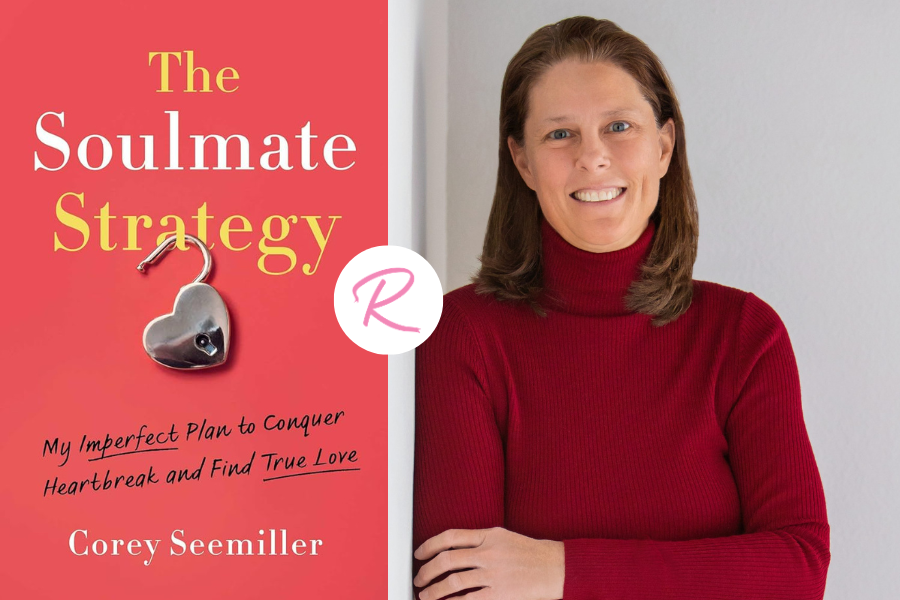
Earlier this year, Corey Seemiller released her memoir, The Soulmate Strategy: My Imperfect Plan to Conquer Heartbreak and Find True Love, a hilariously honest book detailing one lesbian’s journey to find love, and the hard truths she discovered along the way. While healing through her breakup, Seemiller tried everything, speaking to coaches, listening to psychics, even crafting the perfect checklist to meet “the one”. But no matter how hard you try, sometimes you just can’t force life. We spoke with Corey Seemiller about her memoir, her journey, and basking in the unpredictability of life!
In the opening, your father chooses “the certainty of mediocrity” over the possibility of happiness. When did you first realize that choice had shaped how you approach love and commitment in your own life?
I realized shortly after my breakup that I had a great disdain for ambiguity and a relentless need for certainty. This ideology prompted my quest to find my “soulmate” who was sure to provide lasting, undeniable love. But, as I processed with my therapist and others, I came to understand that I, like my dad, stayed way too long in relationships that didn’t serve me. Part of it was that I didn’t want to give up…fail…and have to start over or face the possibility of being alone forever. But, another reason I stayed was to maintain some semblance of certainty. I simply didn’t want change, and I absolutely did not want to start over. But, those relationships turned out to be anything but certain as both people eventually left me...not really the epitome of certainty after all!
So, towards the end of this journey as the efforts I was deploying to guarantee certainty weren’t panning out (like buying a soulmate sketch off the Internet), I realized the only certainty about certainty was that it was never achievable no matter how much control I exerted.
You write with humor even in moments of deep vulnerability. How do you decide when to let humor soften a moment and when to sit with discomfort?
I believe that humor shows up in our lives as a coping mechanism – not the contrived “laugh it off instead of process it” kind of humor but more so, just dealing with life’s absurdities. When truly uncanny or ridiculous things happen, we have to pause and laugh. It is our body’s way of healing. So, I wrote the story just as it happened. If a pivotal event was humorous, I portrayed it as that.
With that said, in writing a memoir, authors have to be discerning about what to include. My first iteration of this book was more than 40,000 words longer than my final draft. Given my verbose storytelling, I was advised to include only those moments that contributed to the bigger story and not every single event that happened during that time period. This exercise required me to only select stories that served the bigger mission of my narrative. While I could have written an entire book on absurd events and ridiculous dates or one filled only with teary-eyed moments, I felt that the balance I experienced in my journey, and thus wrote about, would be most reflective of a more comprehensive experience of the emotional fluctuation that is often real in the healing process.
The book resists the idea of a single “lesson learned.” Were you ever tempted to tie everything together more neatly, or did the messiness feel essential?
The messiness was the real story. So, while I would have liked to have said, here is the one thing I learned, and I found my soulmate after embracing that one thing, that wasn’t what actually happened. My journey was all over the place. Ironically, this book emerged through the process of letting go and embracing flow, which was a complete contradiction to my overly scripted, controlled, and micromanaged quest for healing and love that I wrote about. What a lesson!
You use nicknames like Zion and Runner instead of traditional names throughout the book. What did that choice give you emotionally or narratively as a writer?
On the one hand, using these names harkened me back to a positive time with each character, making both the writing of the story less traumatic at parts and allowed me to channel the good that was embedded in each connection. For instance, the name, Zion, reminded me of this amazing camping trip with my ex in Zion National Park where we decided, against many odds at the time, that we would be together. Runner, the name I used for the other ex in the story, brought back memories of excitement and anticipation for her arrival to my house after competing in a half marathon, resulting in what turned out to be our first date. Even in writing about other characters, like Naked and Afraid and Pants, their names simply made me laugh as I wrote about our antics together that ultimately gave them their nicknames.
There’s a long debate in the story about what “counts” as cheating. Why was it important for you to sit in that gray area rather than clearly define it for the reader?
In our case, the issue between us became more about the definition of cheating than the behavior itself. I just wanted my ex to own it – take responsibility for the hurt she caused and “move mountains” to help rebuild trust. But, I didn’t feel like that happened, and the differing definitions caused a rift we could never get past. In many relationships, serious issues, like cheating, are much more complex than they are often portrayed. And, it was the nuance of the situation that created that real-life complexity.
After the breakup, the narrator fills the silence with small, almost obsessive acts—fostering kittens, building Legos, writing, walking. What do those coping rituals reveal about grief that words alone couldn’t?
Often when we think about dealing with grief from a breakup, it is the big stuff people embrace – doing a full-body makeover, quitting a job and moving, etc. But, truly, it’s a culmination of the little stuff that shows how persistent and pervasive obsession with healing (or maybe avoidance of pain and suffering) can be. Silence and stillness are enemies of the lonely and heartbroken. So, while these little acts helped me feel better to some extent, they left little space for other healing, like processing the feelings, that needed to ultimately happen as well in order to move on.
You frame healing as a list of forty-four strategies. At what point did you realize the plan itself was less about finding a soulmate and more about trying to regain control?
One day, right before Christmas and about halfway through my journey, I found myself obsessively waiting for a text that had yet to arrive. I started to overanalyze and slip into my General (the alter ego that takes control). After spiraling with speculation and overthinking, I had reached a point of exhaustion and deep realization – I had been trying to micromanage my process, and when things didn’t go as I wanted, the General would come out to try to save the day. That often made things worse and ramped up my anxiety. At that point, I decided the only way forward would be to shift my process and instead let things flow, as had been suggested incessantly by my friend, Naked and Afraid. Within a matter of days, though, I felt an absence of my plan, my obsessive quest to find love, and my desire to control. So, I launched right back into things where I left off. The only difference was that I finally accepted the idea that in some ways, my plan was simply providing me a false sense of control. But, I re-engaged with it anyway. And, I did so with a vengeance.
If a reader comes to this book hoping for certainty about love, what do you hope they walk away with instead?
I hope readers feel affirmed that they are not alone with their desire to move through pain and suffering as quickly as possible to heal and find love – even if it means engaging in some absurd tactics, ridiculous experiences, a little relentlessness, and a willingness to learn profound lessons along the way. Heartbreak is messy; healing is messy; love is messy. That’s all part of being human. And, if we lean into this messiness just a bit, we may find self-love, peace, happiness, and all the good that the messiness brought us along the way.
Purchase Corey Seemiller’s book, The Soulmate Strategy: My Imperfect Plan to Conquer Heartbreak and Find True Love, and check out her website for more information.
Interview conducted by Madison Lindell